The Origins of ΦPhilosophit™ and 30 years of Research and Innovation
MY STORY
Birthing Myself
Spoiler alert. This story seems superficially to be about the train wreck of profound, undiagnosed ADHD (inattentive subtype). And it is. From the outside, this version of ADHD doesn’t look like anything, except a moral failure. But that is only the superficial part. It is really about how philosophical skill (what I call Phitness, clear thinking, free choosing, and energetic implementation) is what we need to get through adversity and build lives that are our own creations, on the basis of our own choices and actions. These skills allowed me to survive when I had no one in my corner. And these skills helped me repair and transform my relationships with the people in my life.
This was my second birth. What I was born out of was confusion, anger, abandonment, and incompetence, which was my first birth. It was one of those situations where I was in hell, and no one is coming to rescue me. I had to figure things out myself. What made that possible was my philosophical training.
From that experience grew much of my subsequent research, teaching, and work developing Philosophit —not as advice, but as training in personal strength
that made survival, and later flourishing, possible.
Childhood
The story that formed around me was that I was lazy, careless, undisciplined, and purposively a mess—though, incongruously, people also knew me to be extremely empathetic and sensitive. I could quickly see faults and gaps in proposals; I could solve problems in a flash. But I struggled with basic, routine tasks. Reading, writing, practicing—anything that required steady repetition—was extraordinarily difficult. In areas that interested me, I was prodigious. But undisciplined. Then I could be hyperfocused.
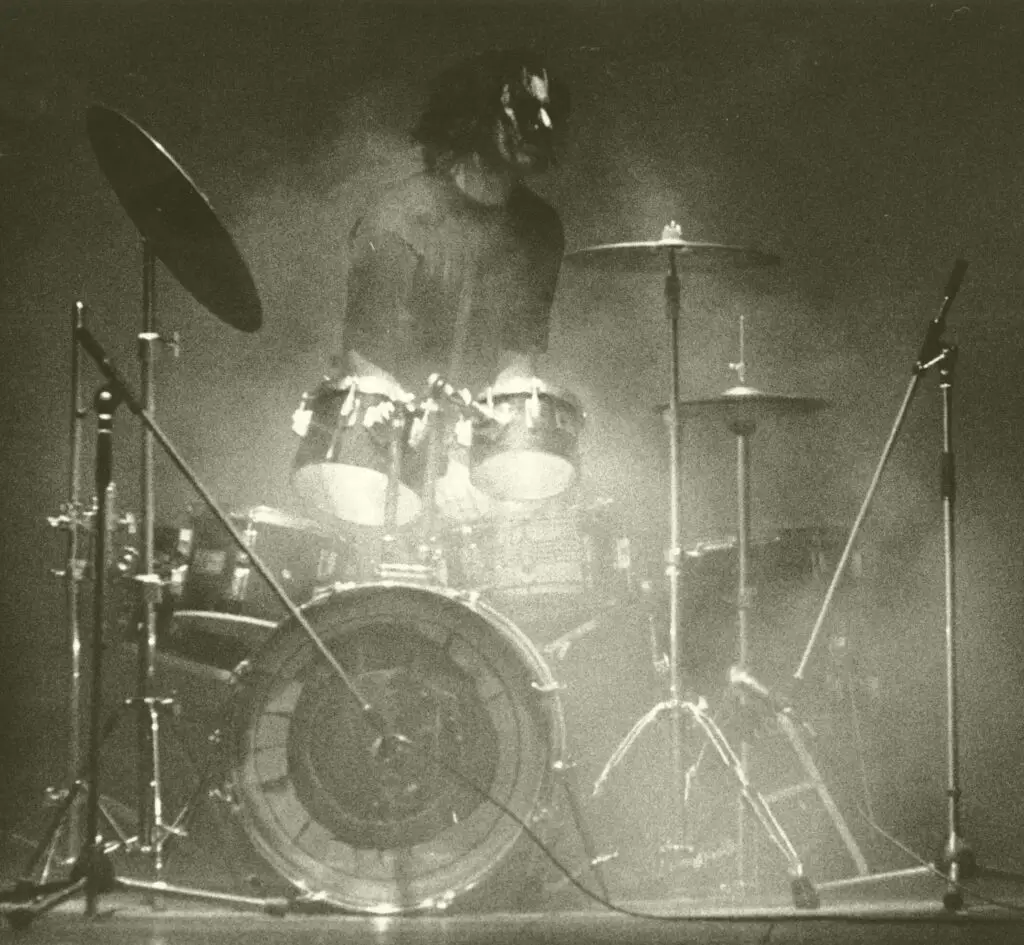
Music was one area that I could be hyperfocused on and in which I excelled. I could hear melodies and reproduce them almost immediately on unfamiliar instruments. I taught myself to play drums; I could play them the very first day I got a kit. I began violin lessons at around five years old and managed not because I practiced, but because I had a good ear. As a four-year-old, I could identify classical Indian ragas in compositions without training. But I couldn’t practice any of my instruments, except sporadically.
Things others had to work at came naturally to me. Things that others could steadily work at, I could almost never sustain. I hated school. I hated reading, writing, practicing, and routine. Few of my teachers I liked. Most of them disliked me: to them, I was the intelligent kid who didn’t try, on purpose.
It’s easy to look back and claim that people were not empathizing with me. But that’s the wrong conclusion, especially if one goes with standard accounts of empathy these days, from folks like Brené Brown. Empathy so understood would require others to put themselves in my place and try to look to past experiences of theirs that would provide a connection to my predicament. It just so happened that what others could imagine experiencing in my shoes was that I was being lazy, inconsiderate, and a jerk, because that’s the only way that they could understand what it would be like to be in my place and behave the way I did: at times, brilliantly, and other times, as a disaster who didn’t complete tasks on time. and executed them poorly.
Years later, when I would be coming to terms with my diagnosis, the one bit of baggage that was hard to shake was how people who claimed they loved me thought so poorly of me. It was hard for me to understand in what way they ever loved me if they disliked me so much as to think that I was really a jerk who intentionally messed things up, intentionally didn’t put in the required effort, and intentionally showed a lack of care.
On my end, I didn’t get support, and it didn’t really help when people were positive and supportive either. My successes were random and unpredictable. Any time I felt like I was turning a corner, that I had reason to feel good about myself, it would be an illusion: I was the same person, with the same flaws. Belief in my abilities (or what is sometimes called a Growth Mindset, the idea that I could in time learn what I find challenging) reliably backfired. What worked instead was pressure. If I frightened myself enough and accepted inevitable doom and failure—if I pushed myself into a state of panic—I could usually make things happen. Emotional self-abuse was effective. And I set up, for years, a habit of intentional self-abusive thinking, because then I got things done.
What I did not realize at the time was that my philosophical education—begun seriously in my late teenage years—was cultivating personal strength that would later save my life: Phitness.
University: Self-Destruction = Exemplary Student
Looking back I can see how hard I was always trying to do what others asked of me. It wasn’t easy. If I did what others told me to do, it would turn out badly. If I adopted a healthy lifestyle, I was a mess. But if I did what I was not supposed to do, things would turn out very well. I started smoking, and reading became easier. When I was old enough to start drinking weekly, in high school, I was able to get an A average in my final year courses and get into a competitive university program. And then, I continued to perfect the strategy of drinking excessively to competitively excel at university. This was bad! I knew better: I am the son of a cardiologist. But I also knew this: everyone liked me better when I was bad, because I was able to get it together. The more of a bad boy I was, the more exemplary I was. My academic hack: get wasted on Friday or Satuday, and enjoy the blissful calm of a multiday hangover to do my studying. All of a sudden, I was no longer the lazy person who was intentionally messing things up. I was the hardworking, excelling student that everyone always wanted.
I never saw a good student who was a party animal. But the more I drank and partied on the weekends, my academic performance only improved.
This was my procedure during my undergraduate years when I was completing my BA in philosophy. I would drink heavily on weekends, on purpose, to get a very bad hangover. The hangovers were glorious moments of rest. They were a period of calm that allowed me to sit still long enough to read, write, and think. As that calm wore off after a few days, I would start getting agitated and repeat the cycle.
From my second semester onward, I was consistently on the Dean’s List (that requires a minimum A- average). After my first year, my grades were trending towards As (not A minuses). And the grades only increased with the drinking. These days, the accomplishments might seem normal: grade inflation is a problem, especially at expensive private institutions in the US where universities are incentivized to give out glowing grades for high tuition. But in Canada public universities are generally stricter about grades, and at the time, this was not the typical student’s transcript.
I knew the strategy was self-destructive.
But really, I didn’t see any other way of going about life. With it, I became exemplary. I finished my fourth year of my undergraduate degree with an A+ in every course. At any rate, I was young. I could handle it. And for a time, the narrative flipped. I went from being an unreliable quantity to a model of success. All of a sudden, the people who had once been critical of me were pleased. My peers and professors were generally in awe of me. And I was predictably, reliably successful.
And all the while, I was learning a lot of philosophy. And that was mostly on my own, in my room, throwing myself at Augustin, Kant or Quine. They are all horrible writers. And yet, I could usually find the argument, pull it out, and make sense of the noise.
Crash and Misdiagnosis
I thought I was being responsible by seeking medical help, a decision I came to regret. What followed was over a year of escalating drinking that kept up with escalating psychiatric medication for a major depression and anxiety dissorder I didn’t have. The medications made me catatonic. Drinking woke me up. Everyone blamed me. But I was also just doing what I was told: I was taking meds that were supposed to cure the range of problems I was experiencing, including alcohol use. I told the doctor the treatment was not working. They told me I was being impatient. When everything reached peak madness, with dosing for prescriptions for multiple drugs maxed out, with me being drunk every day, all day, my doctor fired me as his patient. No one, not one elder, not one teacher, not one doctor, had ever given me any useful advice on how I was supposed to live, how I was supposed to self-regulate in ways that others would be happy with. While I was being misled by everyone, relationships ended, bridges burned, and I was alone.
So while I didn’t mind being a drunk all the time at first, it started to get old pretty fast. With every year, I needed more rest and more recovery. It was harder to sustain the party life. It was also getting boring. Moreover, it also stopped doing the trick. When I was in my MA for philosophy, it wasn’t just enough to get through the material. I had to have something to contribute. And I didn’t know what that could be. It was as though I had spent so much time running through the hopes of explicating all of this philosophy that I didn’t understand what my contribution was supposed to be.
So I put off going into a PhD program and instead chose to do a second MA in South Asian Studies.
Then I crashed. There were lots of toxic elements of South Asian Studies (Indology) that I ended up critically writing about. But at the time, it was overwhelming.
I sought medical help and was referred to a psychiatrist at a prestigious mental health research hospital in Toronto (now CAMH).
I was diagnosed with anxiety and depression and placed on escalating doses of antidepressants.
The treatment made everything worse. I felt detached, unreal, and unable to function. All the reasons I had for drinking intensified. I would stare at walls for hours unless I drank—at which point some clarity returned. When I told the doctor that the treatment wasn’t working, I was told I was being impatient. Eventually, the doses of several psychiatric medications for depression and anxiety were maxed out. By then, I was drinking constantly (not just on the weekends) just to focus. And so, the psychiatrist terminated me as a patient—for drinking. (That’s in part why I came in for help.)
At the same time, my personal life unraveled. A long-term relationship ended. I burned bridges. Family criticism intensified. But no one, NO ONE, had any actually useful advice for me to act on. I tried doing what the doctor prescribed. Things only got worse. I was done already trying to be a good boy my parents and teachers wanted: they only liked me when I was bad. They claimed they wanted me sober. But they only liked me drunk. It’s hard to describe the anger I was feeling at people who never had any useful advice for me to follow but were very critical when things didn’t go well but also seemed pleased with me when I was being self-destructive. It seemed that the people who claimed to love me were actually bent on my destruction. I had no friends, no one on my side. (My rescue dog Maggie was likely an exception, though I think she was also getting rather sad and tired of my peculiar life and the isolation it brought to both of us. )
The meds made me feel disconnected and lonely. I wanted to be in the company of friends. But I was impossible. And drinking and medication were taking a toll on my body and ability to eat.
Philosophy Bootcamp
I never regretted studying philosophy. It wasn’t just that I was really good at it. (I was really good at being a student of philosophy.) It transformed my relationship to a world of information overload. This is no doubt one of the benefits it confers on anyone who takes the trouble to learn philosophy. It encourages skills that allow individuals to create bubbles of clarity in which options can be assessed and clear actions can be taken. And indeed, until you start to engage in this training, it’s easy to confuse the poverty of what you are aware of with the totality of options.
Years later, when I went through a CrossFit stage, I came to appreciate how much learning philosophy is like engaging in serious physical fitness regimes. In both cases, you engage a challenge until you are fatigued. Then you put down the challenge and live an ordinary life. Rest. Eat, and then return to the challenge. In the case of physical fitness, when you return after sufficient rest, you are stronger. In the case of philosophy, what was incomprehensible is clearer. Over time, your capacity for simplifying complexity increases. You become sharper and stronger. This is Phitness. I had devoted the past six years of my life to being a philosopher. And when I was in an extreme crisis, drunk all the time, and on the maximum dose of psychiatric drugs treating a disorder I didn’t have, my Phitness training came through. Not only was I able to appreciate the absurdity of the support I had received, but I also had the trained capacity to understand research publications, look through the literature, accurately find the diagnosis of ADHD, drag my butt to an expert on Adult ADHD, and hand all the information they needed to confirm the diagnosis on a plate.
This training taught me about reductio ad absurdum: the refutation of a proposal by showing it results in an absurd conclusion. And what I could observe was that I was living an absurdity. I had put my trust in doctors and had given in to the kind of expectations my elders had of me, and I turned out into a person drugged and drunk.
This training taught me about ad hoc explanations: stories invented to protect a theory from evidence. The idea that the problem was my character and laziness, rather than a failure of diagnosis, was an ad hoc story. What people (my elders and doctors) wanted to be able to say was that they knew what was good for me, and that if I did as I was told, things would work out well. I did what I was told and things never worked out well. If they were sensitive to the evidence, they would have had to revise their theory of my predicament. Creating a story about my defective character protected their theory about me, at the expense of the evidence.
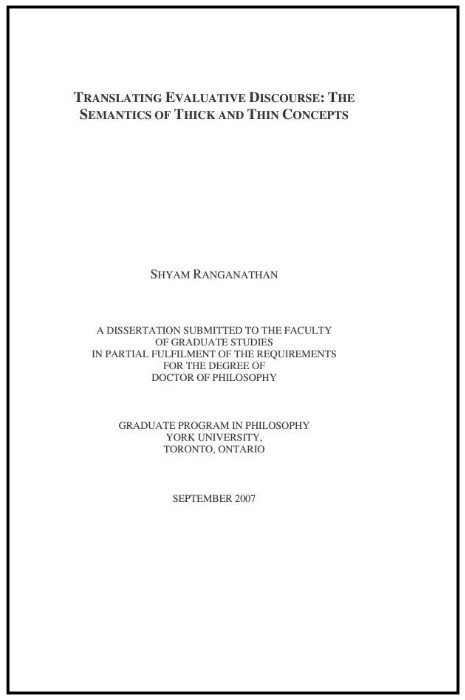
Philosophical training is training in evaluating evidence. These skills also help make sense of research. I started reading the scientific literature. Even while heavily medicated and drunk all the time, I searched for diagnoses and studies that would fit my history. I diagnosed myself with ADD (now ADHD, inattentive subtype). At the time, adult ADHD was controversial, and no psychiatrist in town would treat or diagnose an adult with ADD. I tracked down the leading adult ADD expert, read his work, sought assessment, traveled to another city and country to see him, and received confirmation of my diagnosis. In the end, I did the work that the psychiatrists should have been doing.
The truth is that we are all quirky and unique. Life is filled with people who try to give us a one-size-fits-all explanation of how we should be living, and what we should value. But that ignores the reality of our unique circumstances and challenges.
My somewhat unique context was my ADHD. It explains paradoxical experiences of this kind. ADHD brains are understimulated, and attempts to calm them down can intensify distress. Add what others find stressful or stimulating, and these brains can come into equilibrium. Because inattentive ADHD does not manifest as outward hyperactivity—a common compensatory form of stimulation—its effects can be profound and easily misread. This also means that the harder a person tries to follow “normal” advice for self-regulation, the worse their regulation and behavior may become. And ironically, what looks like a refusal to self-regulate can be a strenuous attempt to self-regulate by bad advice that would work on everyone else.
But the universalizable lesson is this. The advice we receive is rarely made for us. Coaches, elders, and spiritual leaders often present a narrative in which they possess the cure for what ails you: all you need to do is follow their instructions. To make such advice appear authoritative, it is frequently anchored to some external source—God, tradition, science, or an influencer. But the real challenge of living is coming to terms with ourselves as agents who must do the living ourselves. Someone else’s advice cannot do that work for us, any more than someone else lecturing you to eat or sleep can help when you cannot eat or sleep. Philosophical skill is the one add-on we need to make ourselves into a source of guidance for ourselves.
What I Learned: Five Common Confusions
In a way, the universe flipped. I went from being the person who “couldn’t get it together” to being the only person in my orbit who was thinking clearly. I was angry, bitter, and damaged from a year of the wrong medication and constant drinking.
But I was also furious at the way everyone else in my life (parents, family, elders) was demonstrably incompetent in helping me out and yet so utterly incapable of reconciling that demonstrated incompetence with their sense of entitlement (or perhaps duty) to criticize me and my choices. Still, they acted as though, had I just listened to their advice, I could have saved myself this trouble. I was in trouble because I had followed their advice, both in terms of procedure, but also in terms of the outcomes they wanted. And I was following the advice of doctors whose prescriptions were supposed to fix the problems, including the drinking. The only thing that snapped me out of this madness was my self-parenting made possible by my philosophy training.
What my Phitness training allowed me was the capacity to think clearly while I was angry and upset. And in this state of disgust, fury, disappointment, and more anger, I noticed five confusions that are pretty common but, nevertheless, deplorable.
First, people cling to their outlook as an explanation even when that outlook makes them miserable because it fails to produce the outcomes they want. I found this remarkable. No one was happy with me. But no one was willing to change their theory about me to try to get a different outcome. That I couldn’t be managed according to their expectations should have been evidence that their theory about me was wrong. But even the psychiatrist found it easier to blame me than rethink the diagnosis and treatment.
Second, most people do not know why they are successful, and yet, their success provides them unfounded confidence in giving advice.
If someone truly knows how they achieved success, they should be able to explain it in a way that others could replicate. Most extremely successful people cannot do this, which is why they are often the worst sources of advice. Ask a self-made billionaire how to do what they did and try to follow that advice—it will not be replicable. If it were, everyone such a billionaire advised would become a billionaire. The reason most people do not know why they are successful is that their success is a lucky coincidence of genetic endowment, material conditions, and circumstance.
Third, people routinely mistake symptoms for causes.
Anxiety and depression were treated as my problem, rather than as signals of something else. My inability to sit still and see projects through was treated as the problem. It wasn’t. It was a symptom. This confusion—mistaking correlation for causation—is widespread. It also generalizes. Take poverty. It can look as though the lack of money is the problem, when it is often a symptom of deeper structural causes. If those causes are not addressed, nothing changes. And blaming people when advice fails is simply a repetition of the first error.
Fourth, doctors, healthcare workers, therapists, coaches, and naïve seekers of help from seemingly qualified professionals are, with rare exceptions, guilty of the Ecological Fallacy. It is so common, it is easier to count the exceptions than those guilty of this.
This is a version of the fallacy of division: moving from a statistical generalization about a group to conclusions about an individual. It is an invalid inference. This occurs whenever a professional points to a study showing that a treatment has, say, an 80% success rate and infers that there is a very good chance (80%) that it will work for the person in front of them. Much contemporary science-based self-help relies on this mistake. And even when such advice is genuinely evidence-based, it does not follow that it will help the individual seeking help. What gets celebrated are averages and successes. What gets ignored—or blamed—are the outliers, the individuals.
It’s important to notice this is not a criticism of public health measures, like vaccine policies. The motivation for that is population-based and not really about the individual. If a vaccine has a higher-than-average rate of success, that can be sufficient to cut down transmission and to produce the public health outcomes that are wanted. There are good arguments for such policies, as they reduce the risk of the relevant disease for everyone.
When we go to see a health professional for a problem, it’s not a public health exercise. We need help, as individuals. And yet, the way the discipline is set up, especially with specializations conflate symptoms and causes. For instance, hypertension could be caused by anxiety. In my case it is caused by being understimulated (which sends my body into a panic). But it’s treated as a cardiac problem because there is a high rate of treatment success for hypertension as a cardiac problem. So if your blood pressure is high, you are likely to be given something for hypertension, even if that’s not the problem. I can tell you what happened in my case. The more cardiac medication I’ve taken, the faster my heart rate and the higher my blood pressure because my brain was panicking as my blood pressure and heart rate decreased. And in this case, your cardiologists will then give you a lecture about cutting out the salt, when that’s not the problem. And again, you will be blamed for being a bad patient. (I instead had the good sense to cut out my cardiologists. Unfortunately, I didn’t do that quickly enough, and I had years of illness related to that.)
With respect to treating ailments, this fallacy of division works to create an uncritical acceptance of the state of the art in medicine and related health care fields because it shows some better-than-average treatment success.
And, not to put too fine a point on this, anytime a doctor wants to prescribe a medication to you because it’s cleared a study, it’s worth checking what the rate of success is. And often, even if it’s simply better than the placebo at trial, it will still be pumped up as the next best thing. And there are usually side effects, which you may end up suffering while the drug does not work in your case.
Fifth, people often claim, in the face of these criticisms that "they were doing the best they can." That's almost always false. It would have been better if they just not interpreted.
Fifth, people often claim, in the face of these criticisms that "they were doing the best they can." That’s almost always false. They could have just not interpreted.
The one commonality to all of these errors is that they are all versions of interpretation. They all rely upon some view of the world, often supported by some evidence, that is then offered as an explanation. And the flip side of these errors is that they don’t make room for individuals to have their agency supported. The agent disappears against the backdrop of these imposed expectations. The more the interpretation is applied, the worse off the agent is.
With respect to people doing the interpreting, it creates a false sense of helplessness. Once they’ve chosen to explain in terms of their outlook, they can’t appreciate any alternative, and they also tend to feel frustrated that life is not turning out as they wish. But they could have always done one better. They could have decided not to use their perspective as a way to understand the possibilities.
Two Common Coaching/Self-Help Hacks Didn’t Fix Anything. I will tell you why they can’t.
During my efforts to rein in my life, I had tried two common, well-publicized approaches to self-help that I see recycled in the coaching world. They don’t work, as a rule, but if you engaged in the Ecological Fallacy and relied on a very narrow trial where they were correlated with successes, you might be convinced.
One of the reasons that binge drinking seemed to work, for me, is that it did give me an opportunity to enjoy, for a brief moment, a feeling of optimism. And this optimism came with the sense that I had to just keep plugging away. I could make things happen, learn, and adapt.
When I was younger, I did have a sense of learned helplessness, but oddly, with the ADHD, if I could convert this to an internalized depreciation, it was a bit helpful. It could stimulate me enough to get something done. But it was exhausting to be down on myself all the time. It was in some way easy: everyone else was down on me. So I got that negativity for free. But it is taxing. So drinking and feeling optimistic provided me a break. And then the hangover would kick in, and I could do a bit of reading and writing. And for some time, it seemed to be working. And for some time, I bought into the power of positive thinking. In fact, when things got really rough, I would tell myself that I just needed to get wasted. And I always felt reset. The negativity I had vanished, I had a wonderful hangover, and I could get back at it.
And I can appreciate the attraction of positive thinking as a life hack. It seems free: you don’t have to buy a positive belief from someone (though I suspect this is why lots of folks go for therapy). And there even is some research on this. This is sometimes known as having a "growth mindset," derived from the work of Carol S. Dweck. (See her "Can Personality Be Changed?: The Role of Beliefs in Personality and Change" in Current Directions in Psychological Science, 2008.) What Dweck noticed is that students who were optimistic about their capacity to learn and overcome obstacles by persistence succeeded when students who lacked that optimism failed. There are, of course, lots of reasons to be suspicious about this observation, for it seems to confuse an intelligible correlation (that people who are having an easier time of things will be more optimistic about their prospects than those who are not) with a causal relationship between the belief and the outcome.
Now, given my subsequent philosophical research on the nature of beliefs and how they interfere with reasoning, it seems obvious to me that the idea that you can overcome difficulties because you believe you can endows beliefs (which are just attitudes that certain thoughts are true) with enormous, supernatural powers they lack. And, indeed, there is probably more data available at large of people believing in their prospects and capacities, only to have life dash those hopes.
I think lots of folks don’t want to acknowledge the reality of neurodivergence like ADHD, for it ruins the story that we can just positively think our way out of adaptive problems. The reality was, in order for me to get the diagnosis I needed, I had to first come to terms with the very real, hard limit I had in my life that positive thinking couldn’t overcome. For no matter how great I felt when I was drinking and how positive I was about my projected capacities to overcome obstacles by learning, the reality was that the hangovers could only do so much magic, and at some point I was still the same guy who had a horrible time reading, writing, focusing, and sitting still. I was still the same kid who was really bright and also remarkably incompetent, all at the same time. That incompetence couldn’t be swayed by a belief, for it wasn’t a function of any possible propositional attitude I had.
However, when I accepted this hard limit as something I could not positively think my way through, I gave myself energy to do something else: look for a diagnosis that could explain these hard limits. And superficially this looks like an exercise of growth mindset, but it was not. It was something I could only do after I had hit a bedrock of grief, and I had to come to terms with the reality that I had been misled by everyone, that my optimism in my capacity to learn my way out of my problem was falsified, and that my problem was not a function of learned helplessness that a self-directed pep talk could fix.
So yes, sometimes getting wasted and allowing yourself to erase that learned helplessness with some optimism might work. But it’s not going to work when you have a real problem that isn’t a function of your own negativity.
For a time, I had adopted a Stoic approach to life. It was supportive and in keeping with entertaining a growth mindset. One main implication of Stoicism, especially from Epictetus, is that we ought to focus on what we control and relinquish concern for what we do not. I think in part that was what an enormous amount of alcohol and the hangover allowed. I could tune out various concerns over which I had little influence and focus on what was in my sphere of influence.
According to Epictetus, what we have under our control is our minds, not our bodies. And so we ought to really focus on our emotional response to our observations and leave aside the real-world events that we have no direct influence over. This doctrine rests on a more general Stoic view about assent. Accordingly, while humans are not responsible for the impressions (mental representations) they receive from the world, they are responsible for their "assent" (approval or judgment) regarding those impressions. This capacity for assent is in our power in a way that external stimuli are not.
Marcus Aurelius, an Emperor, takes this to a political, conservative absurdity. In his Meditations, he claims, "Take away the complaint, ‘I have been harmed,’ and the harm is taken away." Accordingly, the harm we suffer is not the objective injury we suffer, but how we emotionally respond to it. Politically, people who choose to be Stoics are apparently writing a blank check to everyone else to treat them however they choose, because the external injury isn’t real: it’s just about how you opine on it that matters.
The problem with the Stoic theory of assent is that it rests upon the false view that we have no control or influence over our experiences, only how we respond to them. We can change our experiences by doing different things. Psychotropic drugs are interesting because they are influences on our bodies that change the way our minds function.
But Epictetus’ view that there is some type of freedom we have in the mind that we lack in the body is falsified by the experience of profound mental illness. Our minds then, and our responses, are quite difficult to control. But, also, we can change the way the body functions (by therapeutic interventions), and then how our mind functions changes. And the decision to take a pill, smoke a cigarette, or drink to oblivion are things we can do to our bodies that change how our mind functions.
The more general philosophical point, which I explored and lived through, is that what we can control and what is beyond our influence is context-bound, and the context is often dependent upon some choice that keeps us in that context. I can choose to leave my key at home and then be locked out. It would be false to generalize about my inability to influence external physical reality, but only my feelings about the door being locked. I could make a different set of choices that would lead to a different set of competencies.
So while indeed, I wasn’t really very good at controlling my mind, I built that capacity through taking philosophy really seriously. And then I was able to unlock a diagnosis that facilitated great understanding with respect to the pathophysiology of what I was going through. And then when I understood that, I could influence my body in successful ways that would change my capacity to influence my mental life.
The folks who feel that they have no control over their external life but some type of sovereignty over their mind are benefactors of a very strange ableism.
This would have been a fine point for a happy ending. But it got worse before it got better… Phitness Pulled Me Out of Psychosis.
The catatonia was a new problem that correlated with the antidepressants. Nothing else in my schedule, habits, environment, or workload had changed. So I concluded that it was to blame.
Once I had the correct diagnosis of ADHD, I also had an explanation for the alcohol use. It was no longer needed. For the same reason, it was clear that the antidepressants were inappropriate: they were aimed at a condition I did not have. On that basis, I decided to stop both. That was probably a mistake. I certainly wasn’t going to seek further help from a psychiatrist. I learned my lesson. It was my philosophy training that I would rely on.
I did something precipitous: I quit drinking and medication cold-turkey.
Had I known what was to follow, I might have made a different choice, though perhaps it was the most expeditious way to get on with my life. Once I went cold turkey, I had to weather a year of psychosis—hallucinations, paranoia, and delusions. It didn’t help that I had already come to believe that everyone was conspiring against me with their incompetence and bad advice.
And they were functionally part of a conspiracy. But I came to appreciate that this is nothing different than a ubiquitous normalization of oppression, where most everyone operates as though their capacities of understanding have to be constrained by some outlook that limits their imagination. And the reason this is conspiratorial is that it is irrational and oppressive, but people do it out of a concern to keep up with everyone else’s interpretation for fear of being themselves victimized for being outsiders. (Chapter 4 of Moral Philosophy and De-Colonialism addresses how this operates in ordinary practices of gatekeeping.)
At the time, I was careful to parse out the wider systemic problems that are real in the world, that would continue to be real whether or not I believed my delusions, and hallucinations and the verity of these new add-ons, complete with a chorus of chattering people, strange phantasms, persistent distortions in my perception, and altered experiences. Being a philosopher who took learning philosophy seriously led to Phitness skills that saved me. One of the first things philosophical training teaches is that conviction is not evidence. A common unphilosophical move is to treat the fact that one is convinced of something as a reason for believing it. That is a form of begging the question: using a conclusion as its own support.
My psychosis, complete with delusions and narratives of paranoia and hallucinations, was just another set of convictions. The philosophical task was to determine whether there were reasons to take those convictions seriously, apart from how compelling they felt. There were none. Anything that looked like evidence turned out to be an entailment of the delusions themselves, which is not evidence at all. On that basis, I was able to walk myself back from them—slowly.
And as I walked myself out of the mouth of the womb I was gestating in, I had to develop what I now call the explicator’s empathy. I actually think it’s the only real possibility for empathy there is. This involved understanding the propositions that everyone around me was committed to, which led to their emotional limitations and inabilities to cope with me and our history. That allowed me to appreciate where they were coming from, in a way, from their perspective, without me having to engage in act of solidarity with their maladaptive emotions towards me.
I had already spent my first life trying to emotionally commiserate with how others felt about me. And I was actually very good at it because I didn’t use my emotional vocabulary to model it: I took their frustration at me at face value and then made those feelings my own. It worked, in a strange way, with the ADHD, to get me to be a bit more of what others wanted. But I also lost myself and my boundaries in that exercise. And in the end, I allowed their pathologies to take over me.
The Brené Brown variety of empathy requires that you reach into your emotional repertoire to connect with what someone else is going through. The only feeling I have that would fulfill this requirement is anger, but that isn’t great as a way to patch things up. Finally, I already saw what that type of emotion-based empathy did for me. It led people to project all sorts of discreditable motives onto me, for those were the emotions others had that would allow them to make sense of my behavior. No one needs that.
Why Phitness Is Different: Compassionate Instruction, Validated In Action
I could have been crushed. But I wasn’t. I finished my MA in South Asian Studies, writing a thesis that became my first book. I undertook a PhD, began the work that would shape my career, and met a remarkable woman who would become my wife. Over time, my life stabilized. We built a family, had a wonderful human son and a border collie daughter, and I went on to a career in academia and then into entrepreneurship, coaching, and public philosophy. I have written books and scholarly articles, and the work keeps expanding.
And along the way I am able to be of help to others.

What Phitness by my philosophy education allowed me was the one life skill that was not about conforming to others’ oppressive expectations. It was a practice of developing my own agency that allowed me to responsibly sort through information in difficult times, choose freely, and then, with decluttered internal resistance, see these choices through. The great thing about these skills is that everyone has an interest in developing them. Unlike fad treatments that have only a partial rate of success, working on your own thinking so you can make your own free choices and implement them with ease is just a good thing for every one of us as agents. In my own case, as I developed these skills, I created a space for others in my life to do the same. And so the same people who were unhelpful and part of the challenge I was undergoing changed. They became more responsible for themselves. They also became appropriately modest in their own assessment of their own competence, which was a welcome relief for me. And they were then, as a result, far more compassionate towards me. And from my end, it was easy for me to be compassionate, as I was not doing anything that could aggravate other people’s problems. I wasn’t making myself a nuisance to others. I was cleaning up my own act and giving people an opportunity to do the same.
When I went on to teach these skills to my students as part of their philosophy education (the kind of skills they need to read philosophy, isolate arguments, evaluate options, and contemplate what they could act on), they reported the same outcomes: improved well-being for themselves and for their relations. As a business concept, it was validated before I went to market with it.
Phitness is not work you can do on your own. Academic training is hit and miss.
My Phitness skills were there to save me when I was alone, but I didn’t learn them by myself. My philosophy professors modeled the behaviors I focused on while learning. Most of my peers did not exemplify these skills, and many philosophers leave them behind because they wrongly think they are only important for learning philosophy, rather than for being a philosopher.
Moreover, I made a point of treating my philosophy education as an opportunity to work on my own Phitness. I made the most of the opportunity afforded to me by my training, though it took years before I had something to show for it. This was largely because I wasn’t being coached; I was simply picking up on the strengths of my teachers. While my professors were generally not masters of Phitness, I had enough examples to focus on the essential skills and set aside their bad habits.
What Phitness allows you to do is turn your place of failure into the place you settle down to do your work. What these skills allow us to do is to change a challenge into an opportunity to build our strength. But that has to be engaged responsibly, over time, and in ways that permit recovery. It’s not something one can activate all of a sudden when things get bad. I’m quite certain that this is the reason that people underestimate the power of philosophy to solve life problems. They turn to it when it’s too late. And while it is possible to gain coaching via ΦPhilosophit™ during a crisis, no one has set this up before. What we find at large are counseling and therapeutic interventions marketed to people in crises. What people need, even when they are in crises, is to be able to convert their challenge into a strength-building exercise. And that is a kind of training, not counseling. That training is not about the specific challenge they are undergoing. It’s training for transferable skills that we can and should deploy in all contexts. I am also pretty sure that people in crises will not be particularly motivated to undertake such training, for it seems not to address their specific problem. I take that as a positive: when we have a problem, we also need a break from it. That’s what my Phitness training has allowed me. It allowed me a way to reframe the challenge of my life away from the dynamics of pathology into a win-win for all concerned. But misery loves company, and often misery wins over what is salutary.
Certainly, Phitness has to do with clarity of thinking. But we do not think in abstraction. We think with brains, nervous systems, and bodies. When Phitness is cultivated, we change how we relate to ourselves in our own skin and to others in a common social world. We are literally molding the plasticity of our nervous system according to considerations that protect our agency. It is not a practice that requires that we be virtuous, strong, good people. It’s something we start when we are weak, less than virtuous, and full of potential, just as physical fitness training begins before we’re fully developed athletes. And just like physical fitness training, Phitness training, when vigorous, feels like hell. What you experience are your limitations. But what you are actually gaining is strength. And there is a remarkable reward to such well-earned discomfort.
Lorem ipsum dolor sit amet, consectetur adipiscing elit. Ut elit tellus, luctus nec ullamcorper mattis, pulvinar dapibus leo.