
Philosophy of Religion, Race and AI
- Expertise
- Philosophy of Religion, Race and AI
Philosophy of Religion, Race, and AI
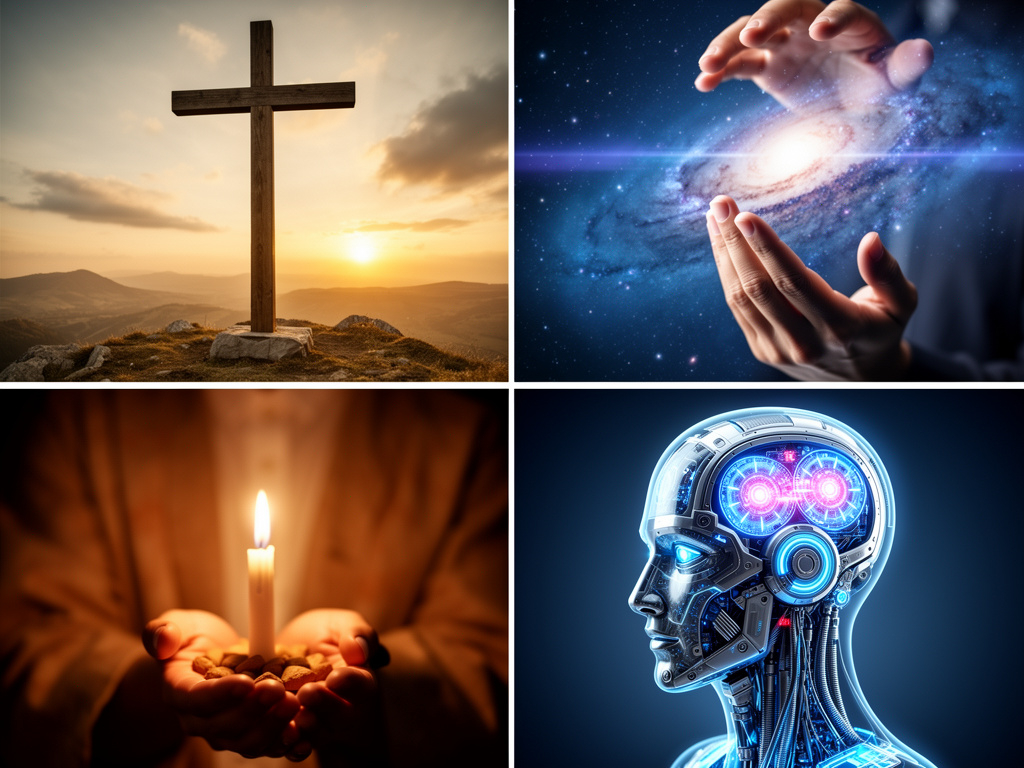
It’s widely known that race is a social construct. To understand it as a social construct is to understand that it doesn’t have any foundation in reality aside from people’s beliefs about it. Similarly the same is true of religion but it’s often harder to see this in the case of religion because whereas race is generally understood as a social construct, people take religion and having a religious identity really seriously. That does not render it any more based in reality than the idea of race.
We know that race was created as part of a theory of hierarchy at the start of the expansion of Western colonization in the modern period. The racial schemas that were dreamt up were meant to normalize the colonization of Black Indigenous and people of color, and correlatively normalize white people as the natural winners of this institutionalization of oppression.
Religion, in contrast, is an idea created by the Romans as part of their rollout of colonization. In order for you to have a subsidiary place within a colonial space, you had to be understood as having a religio and traditions that lacked recognition as having a religio, like the early Christians were persecuted. Having a religious identity within a colonial context seems attractive because it allows for some recognition of the history of the unique identity of people with religious identities within a colonizing world.
What people don’t usually appreciate is that this is a created and enforced subsidiary position. Once people understand themselves in terms of religious identities, or once they understand or believe the reality of religion, they no longer learn about what this tradition has to teach us about long-standing and interesting philosophical questions. Instead they rather interpret it according to whether it conforms to or deviates from the Western traditions
Race: We Know Its Origins. That’s why it persists.
In order to get the idea of race off the ground, you couldn’t treat people as intellectual equals who have something to contribute to debates about how we should live. The whole point is to render people predictable and defined according to predetermined racial stereotypes that then animate the kinds of lives they are allowed to live within a racialized world.
In order to get this project off the ground, you have to, as I noted, not treat racialized people as though they have something in the way of reason and argument to contribute to ongoing questions of how we should live. Rather we have to interpret them according to our outlook, our Western outlook, and the result is they are then judged in terms of their proximity to Western archetypes. This explains why the darker you are, the more racialized and the worse the treatment you are likely to experience.
The reason this is all important is that it sheds light on the role of interpretation in constructing racism and racial hierarchies. It’s for this reason that it also persists because people, instead of reasoning and learning from each other, use the beliefs they inherit from previous generations. These beliefs were also inherited from previous generations in a world of Western colonization. People then recycle the very tools of oppression that create these hierarchies as though it’s an explanation of the world we live in.
Religion: If You Cared to Learn About It, You Would Be Miffed.
We can draw up a list of world religions and one thing will become glaring: the only things that are ever counted as religions are traditions that have extra-Western origins. Anything that is purely Western, no matter what, is considered secular. Check out the list:
- Judaism
- Christianity
- Islam
- Baha’i
- Zoroastrianism
- Hinduism
- Sikhism
- Jainism
- Buddhism
- Daoism
- Shintoism
- Confucianism
If the West is the intellectual tradition going back to ancient Greek philosophy, then everything that counts as a religion has some roots outside of this tradition. What’s really important to appreciate about this demarcation is that it has nothing to do with content. Something I’ve been pointing out for years in my published work is that if you were to actually pay attention to what got called Hinduism by the British, they invented that idea. It’s not an Indigenous South Asian idea. Neither is the idea of religion Indigenous to any place. It’s completely a colonial fabrication. If you take a look at what’s essential to Hinduism, you’ll find that there is no basic or essential view that all Hindus agree to because the word Hindu was used to label the entire South Asian tradition. Every possible position in philosophy is Hindu.
If you look at the vast majority of the positions that get called Hindu, they are atheistic. They don’t take or assume the ultimate existence of a God who creates or ordains things. The vast majority of positions are actually closer to what we might call naturalistic. They describe the universe as operating according to predictable and observable principles.
What’s fascinating and important is that when we look at canonical Western philosophers such as Plato, Aristotle, and Descartes, we find arguments for the existence of God. The distinction between the religious and the secular is often drawn on the question of theism and the existence of God. When you take a look at actual Western philosophers and what they argue for, even though they’re counted as canonical and secular, they are often deeply invested in ideas that we associate with religion
AI and the Faking Thinking
What does this have to do with AI? Just like the question of race, the only way to keep the idea of religion going and to invent it in the first place is to use beliefs of the Western tradition to judge and evaluate everything else. Everything else is then judged in terms of its conformity or deviation from the West. Simply being non-Western is a significant deviation, which then marks out a position to be treated as religious.
The social reality of social construction is that because people believe things like the existence of race or religion, they create a world that reflects those beliefs. We live in a world where it feels like these things are real, but they’re just as real as the belief in the truth fairy or Santa Claus. We can construct elaborate rituals around these beliefs and institutionalize our sorts of ways to discriminate against each other on the basis of these beliefs, but they’re completely made up.
People interpret the world by using their beliefs about it to explain it, even though those beliefs themselves require some account of their origin. What happens is that people normalize what is the result of a history of irrationality and oppression. Artificial intelligence, especially in large language models, is built on a model of explanation that’s barely distinguishable from interpretation. LLMs are trained to produce answers to prompts that are in keeping with expectations, what we believe and what we’re expecting.
What AI does on a large mechanized, superfast scale is automate the very form of explanation that gives rise to the idea of race and religion in the first place. What is, of course, extremely important to acknowledge is that this type of explanation, namely interpretation, is actually a deviation from what we require to think and reason.
If we had to really critically evaluate AI’s capacity to think and reason, we would find it fails because it strives to give us explanations that are in conformity with our outlook, which is not what reason requires. Interestingly, criticizing the rational failures of AI is also criticizing the rational failures of people’s continued belief in the reality of race or religion. Just like the case of race or religion, AI survives because it creates explanations that we’ve been conditioned to expect.
For the sake of our own well-being, health, and future, being clear-headed about these failures is crucial for us to move into a world that’s more sophisticated, more reasonable, and less pleasing to our expectations. I explore all of these themes in my recent book, Moral Philosophy and De-Colonialism: The Irrationality of Oppression.
According to my analysis, engaging seriously in the philosophy of AI, philosophy of race, and philosophy of religion has a lot in common. It requires understanding the ways in which the phenomena that these areas of philosophical investigation concern are constructed out of interpretation.