
South Asian Philosophy
- Expertise
- South Asian Philosophy
South Asian Philosophy
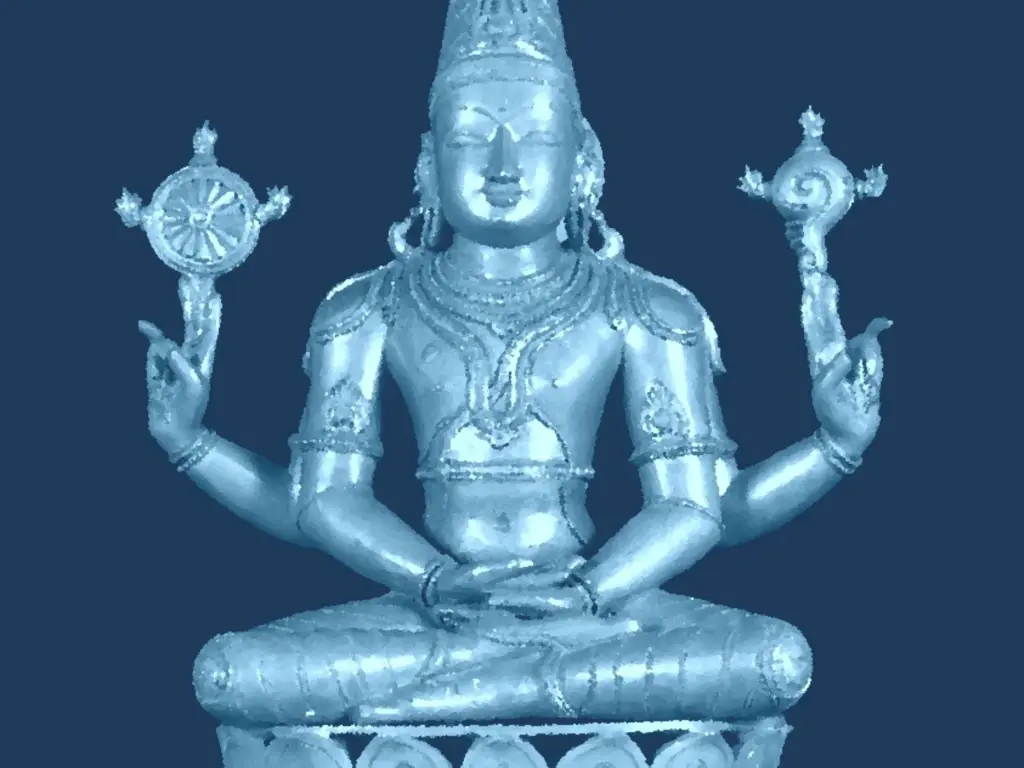
I didnt’ Know About Asian Philosophy
I grew up with a little bit of knowledge of South Asian philosophy. My mom had done a master’s in philosophy and my dad and mom had a collection of some South Asian philosophy in the basement. I poked around in it but I didn’t really know much about it or understand much.
I got interested slowly in the topic only because I started getting really bored with the fact that all the philosophy we were taught in my undergraduate and graduate degrees was from the European tradition. I didn’t really know why we were filtering ideas because of their ethnic origins. You wouldn’t do that in math or science. You wouldn’t decide that because an idea came from a brown person, you’d never study it. Yet in philosophy if it wasn’t originally from a white person, we never studied it.
I personally got frustrated with the lack of space for creativity and new thinking while completing my first master’s degree (the one in philosophy). I decided to take a break from formal philosophy education and do an MA in South Asian Studies.
South Asian Studies Was Even More Racist and White Supremacist than my Western Philosophy Education
I got interested early on in my degree in South Asian Studies with the claim, which I realized pretty quickly is a myth, that South Asian philosophers never wrote on ethical issues. It was obviously wrong to me but what became pretty obvious to me was that the only way that anyone could ever come to this conclusion is if they assumed the Western tradition had said everything there was to say about ethics and then judged the South Asian tradition in terms of whether it said those things.
I call this the "did Brown people say things that White people say" research methodology. Thirty years ago, when I started my research in this area, the assumption was that if brown people had anything to say about ethics, they would have said exactly what white people said. If they didn’t say things that white people said about ethics, they had nothing to say on the topic. That was a level of white supremacist racism that I’d never seen before.
The irony was that I had moved into a space, South Asian Studies, Indology, which was supposed to be populated by people actually interested in South Asia. What I found instead was that it was a place where people basically smuggled in all of their assumptions that they were programmed with due to their upbringing in a Westernized world. They then used that as an opportunity to re-colonize South Asia, which had been already colonized for over a millennium.
My Book on Indian Ethics, my MA thesis in South Asian Studies, was the first monograph on the topic in Decades.
What drew me to South Asia was my interested in the question of how we translate and understand moral philosophy from other traditions. I wanted to pursue this topic because it felt more intellectually free and constrained than the usual racially filtered content we were exposed to.
The first outcome of this initial academic foray into South Asian Studies was my MA thesis, Ethics and the History of Indian Philosophy. It was the first book on the topic of Indian Ethics in decades and, to my knowledge, the most recent monograph on the topic. This started my rather lonely journey as a scholar of Indian Ethics.
What I discovered was that I had a load of assumptions about the South Asian tradition that were themselves a result of my upbringing in a colonized world. I had been raised to think that the South Asian tradition was really largely a religious tradition and that it wasn’t really secular. In time I started to appreciate that all the interesting secular and anti-conservative ideas that drive research and progressive values were actually originally South Asian and that the idea of religion itself was created as a result of the roll out of Western colonization. This slow realization of the remarkable importance of the South Asian tradition as both an indigenous tradition and an anti-colonial tradition ended up coming through in my books such as:
What South Asian Philosophy Teaches
I think the most interesting feature of the South Asian tradition is the way in which it was so different from the Western tradition. Much of what we often think of as secular, modern, and progressive is actually South Asian. Much of what we associate with formally colonized places that are socially troubled and betray inclinations towards hierarchical politics and conservative deference to tradition is actually originally Western. Colonization does something remarkable: it ends up swapping traits so colonial traditions impose their problems on the colonized and often take ideas from the colonized and pretend they made it up.
If we go back to the beginning of the Western tradition, we find that Socrates gets executed and the charges are that he was promoting false gods and corrupting the youth, which is another way to say that he didn’t socially fit in. That begins a long history in the Western tradition of killing public intellectuals who said things that other people found uncomfortable. We had Jesus, Boethius, and Hypatia and many intellectuals Middle Ages that were persecuted for thinking. People were put in prison because they didn’t have the right view but none of this ever happened in classical South Asia.
In contrast South Asia at that time was a radically intellectually diverse and free space where you were allowed to be counterculture. You could leave ordinary society and experiment philosophically and sometimes you could be very successful, like the Buddha. Moreover it was a tradition that, from its very early stages, was philosophically anti-oppression.
Whereas slavery seems to be rather normalized in the Western tradition, there’s no evidence or discussion of slavery in ancient South Asia. Even the practice of keeping livestock was criticized by ancient South Asian philosophers. The world’s oldest history of vegan and vegetarian diets goes back to this time.
My favorite example of how so many of the things that we think are progressive and modern are actually originally South Asian is Mill’s claim in On Liberty that society should be organized around personal experimentation and the freedom to determine one’s own conception of the good. Mill articulates this and also claims it’s for racially mature people and not immature racially individuals like South Asians. However all he’s doing is retelling the basic practice of Yoga, namely self-challenge, and the transparent ownership of one’s own values and choices. The idea that life is an opportunity for us to try new things and make our own decisions is as South Asian as it gets. In contrast, what we learn from colonizing traditions is that basic choices about how we’re supposed to live are not supposed to be up to us. They’re decided by people in power and the rest of us have to follow.
Learning about the ancient pre-colonial South Asian tradition has really helped me imagine a different kind of world that we could live in if we made very different anti-colonial choices. That world would be better for everyone, more intellectually diverse, open-minded, and free for all to figure things out for themselves.