Shyam Ranganathan

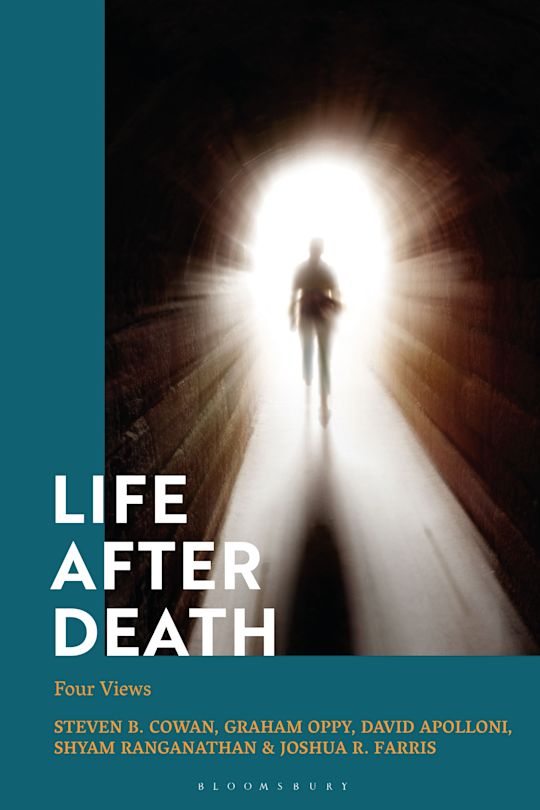
Life After Death: Four Views

Life After Death is a book co-authored by Shyam Ranganathan

Life After Death: Four Views

From the publisher: “This volume brings together renowned experts in the philosophy of religion, Graham Oppy, David Apolloni, Shyam Ranganathan, Joshua Farris and Steven B. Cowan, to present four key starting points in the life after death debate.”

Steven Cown gets credit for bringing us together. This isn’t a mere anthology or collection of separate essays. Each one of us wrote a main contribution outlining our view on the topic of whether there is life after death. And then each of us responded to each other’s views, and then we had one last chance to respond to the criticisms.

In my contribution I argue that persons are moral abstractions from the empirical aspects of their life (such as their body, mind, senses and intellectual functions) that are not reducible to such states but are responsible for such states. As agents so understood are normative and not necessarily descriptively factual, they survive continual states of death and change. Life after death is, on this account, an ordinary state of affairs, which entails responsibility for a dead past we inherit and a future of our making which we will inherit as we inherit our past now.

One of the implications of this position is that we can continue to have relationships with people after they have passed.

From the publisher: “This volume brings together renowned experts in the philosophy of religion, Graham Oppy, David Apolloni, Shyam Ranganathan, Joshua Farris and Steven B. Cowan, to present four key starting points in the life after death debate.”

Steven Cown gets credit for bringing us together. This isn’t a mere anthology or collection of separate essays. Each one of us wrote a main contribution outlining our view on the topic of whether there is life after death. And then each of us responded to each other’s views, and then we had one last chance to respond to the criticisms.

In my contribution I argue that persons are moral abstractions from the empirical aspects of their life (such as their body, mind, senses and intellectual functions) that are not reducible to such states but are responsible for such states. As agents so understood are normative and not necessarily descriptively factual, they survive continual states of death and change. Life after death is, on this account, an ordinary state of affairs, which entails responsibility for a dead past we inherit and a future of our making which we will inherit as we inherit our past now.

One of the implications of this position is that we can continue to have relationships with people after they have passed.

About the author

Dr. Shyam Ranganathan

Dr. Shyam Ranganathan is a translation theorist, philosopher, and teacher. He is the author of five books, one translation, one edited volume, and numerous scholarly papers. His work spans ethics, political philosophy, and the philosophies of thought, language, religion, race, and artificial intelligence, as well as Asian philosophy—especially Indian philosophy, Indian moral philosophy, and philosophies of meditation. His research addresses the intersection of models of thought and explanation and their practical implications for how we live. He is an expert in Western and Indian philosophy and has also written academically on the Chinese tradition.